




How to Protect Items in Storage from Humidity
If you’re storing belongings in regions prone to heat and moisture, understanding how to protect items in storage from humidity is essential. Excess humidity can silently degrade valuable possessions, leading to mold proliferation, structural warping, corrosion, and irreversible damage. Whether you’re storing for a short transition or long-term preservation, implementing the right safeguards is critical.
Why humidity control matters in storage
Humidity introduces airborne moisture that infiltrates porous materials such as wood, fabric, and paper. Over time, this results in:
- Mold and mildew formation
- Warping and cracking of wooden furniture
- Rust and oxidation on metals
- Persistent musty odors
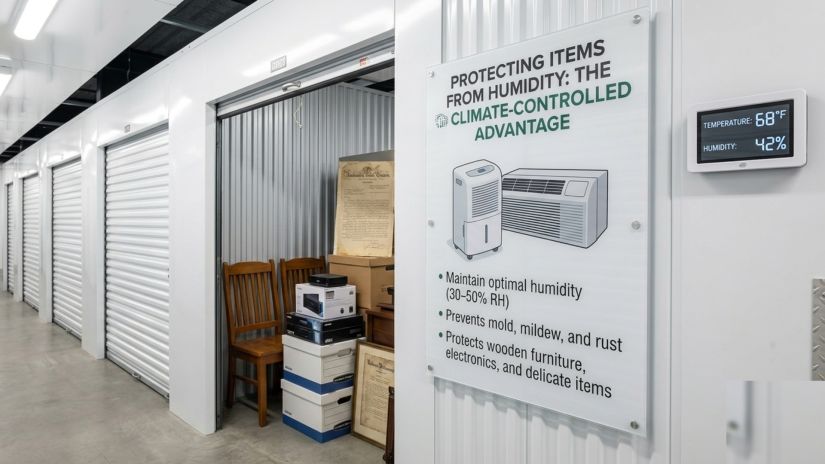
According to the Environmental Protection Agency, indoor humidity levels should ideally remain between 30%–50% to prevent microbial growth and material degradation.
1) Opt for climate-controlled storage
The most effective strategy for mitigating humidity damage is choosing a climate-controlled unit. These environments regulate both temperature and moisture levels, significantly reducing risk. If you’re considering premium options, explore United Spaces Storage to maintain optimal conditions for sensitive items.
2) Replace cardboard with airtight containers
Cardboard is highly absorbent and vulnerable to moisture infiltration. Instead:
- Use sealed plastic bins for documents, clothing, and valuables
- Store fragile items in moisture-resistant containers
- Limit cardboard use to low-risk, short-term storage
This transition alone can drastically reduce humidity exposure.
3) Incorporate desiccants and moisture absorbers
Desiccants actively remove moisture from the surrounding air. Effective options include:
- Silica gel packets
- Calcium chloride absorbers (e.g., DampRid)
- Activated charcoal
Place these strategically throughout your unit, especially near corners and enclosed containers. For further guidance, refer to National Institute of Building Sciences recommendations on moisture control.
4) Elevate stored items
Direct floor contact increases vulnerability to condensation and water intrusion. Best practices include:
- Using pallets or shelving systems
- Placing plastic bins at the base layer
- Avoiding direct contact between cardboard and concrete floors
Elevation creates a barrier against ground-level moisture.
5) Promote airflow and avoid overpacking
Restricted airflow accelerates humidity buildup. To mitigate this:
- Leave small gaps between stored items
- Avoid tightly wrapping furniture in plastic long-term
- Position larger items to allow air circulation
Balanced spacing helps prevent condensation pockets.
6) Ensure all items are completely dry before storage
Residual moisture is one of the most common causes of damage. Before storing:
- Thoroughly clean and dry appliances
- Wash and fully dry fabrics
- Remove moisture from sealed containers
Even minimal dampness can trigger mold growth over time.
7) Periodically inspect your unit
Routine inspections allow early detection of humidity-related issues. During visits:
- Replace moisture absorbers
- Check for mold or odor
- Adjust storage configuration if needed
Proactive monitoring ensures long-term protection.
Final takeaway
Mastering how to protect items in storage from humidity requires a combination of environmental control, strategic packing, and consistent oversight. By leveraging climate-controlled solutions, moisture-resistant materials, and proper organization, you can preserve your belongings in optimal condition regardless of climate challenges


